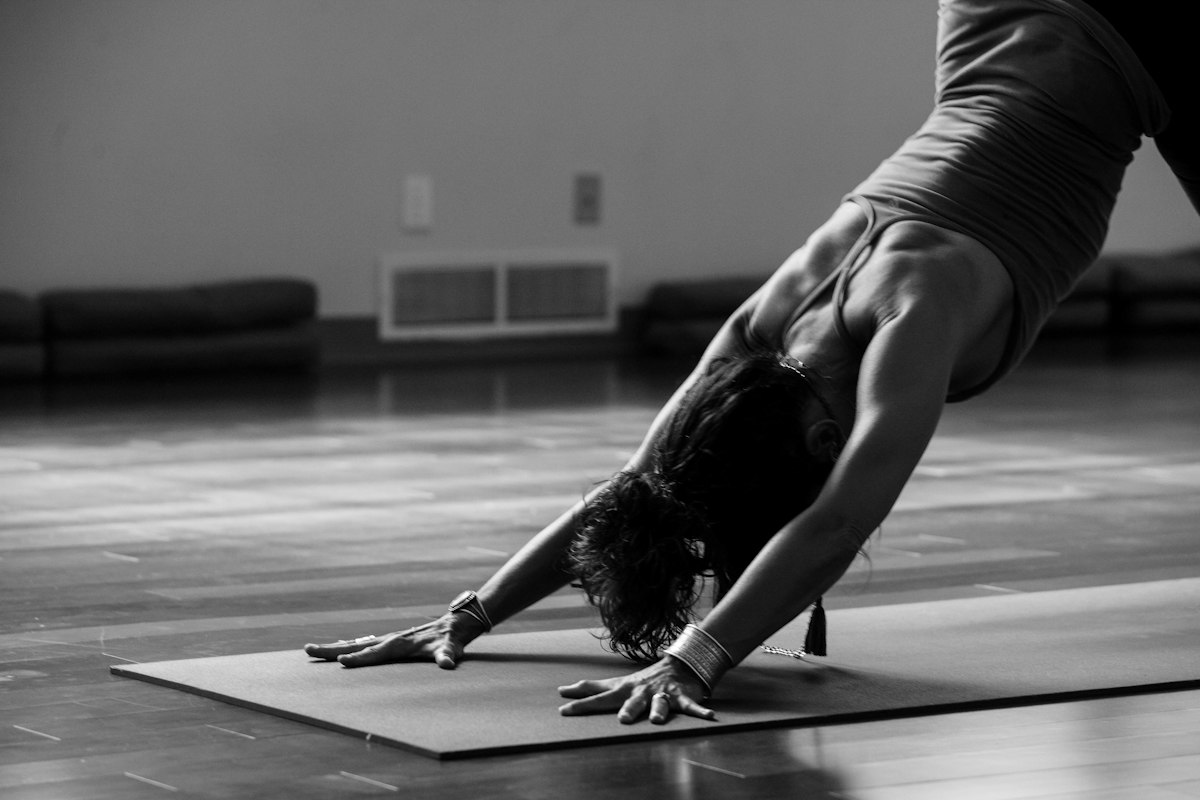
Following our broader discussion of prenatal yoga safety, this piece offers a more specific, practical rundown of poses and movements generally avoided or significantly modified during pregnancy, and why.
Deep Twists That Compress the Abdomen
Closed twists — where the torso rotates toward a bent knee, compressing the abdomen — are generally replaced with open twists during pregnancy, rotating away from the belly or twisting from the upper back and shoulders only, preserving space for the growing uterus.
Lying Flat on the Back (After the First Trimester)
Extended time lying flat on the back can, particularly later in pregnancy, place the weight of the uterus against a major vein (the vena cava), potentially restricting blood flow and causing dizziness or discomfort. Most prenatal-modified practices replace flat-back positions with side-lying or propped, elevated positions instead.
Deep Backbends
Poses like full Wheel Pose or deep Camel Pose place significant stretch through the already-stretched abdominal area and core, generally avoided or significantly gentled during pregnancy in favor of milder chest-opening alternatives.
Deep Forward Folds With Belly Compression
Standing forward folds that bring the torso close against the thighs become increasingly impractical and potentially uncomfortable as the belly grows — widening the stance and folding with a long spine, rather than collapsing forward, accommodates this change.
Inversions, Particularly for Those New to Them
Headstand and unsupported Shoulderstand carry increased fall risk given pregnancy's shifting balance, and the changing relationship with blood pressure and circulation during pregnancy adds additional caution, particularly for anyone not already experienced and stable in these poses before pregnancy.
Hot Yoga and Significant Heat Exposure
Overheating during pregnancy carries genuine risk, which is why hot yoga styles (practiced in heated rooms) are generally avoided entirely during pregnancy, regardless of prior experience with the style.
Deep Core-Compression Poses
Poses requiring significant abdominal compression or intense core contraction — certain advanced Boat Pose variations, for instance — are generally modified to gentler core engagement that doesn't compress the growing belly.
What to Do Instead
Rather than viewing this as a long list of restrictions, reframe it as pregnancy calling for a genuinely different, equally valid practice — supported, gentle, breath-focused movement that serves this specific life stage, distinct from but not inferior to a pre-pregnancy practice.
This article is for general educational purposes only. Always consult your doctor or a qualified prenatal yoga teacher for guidance specific to your pregnancy.